
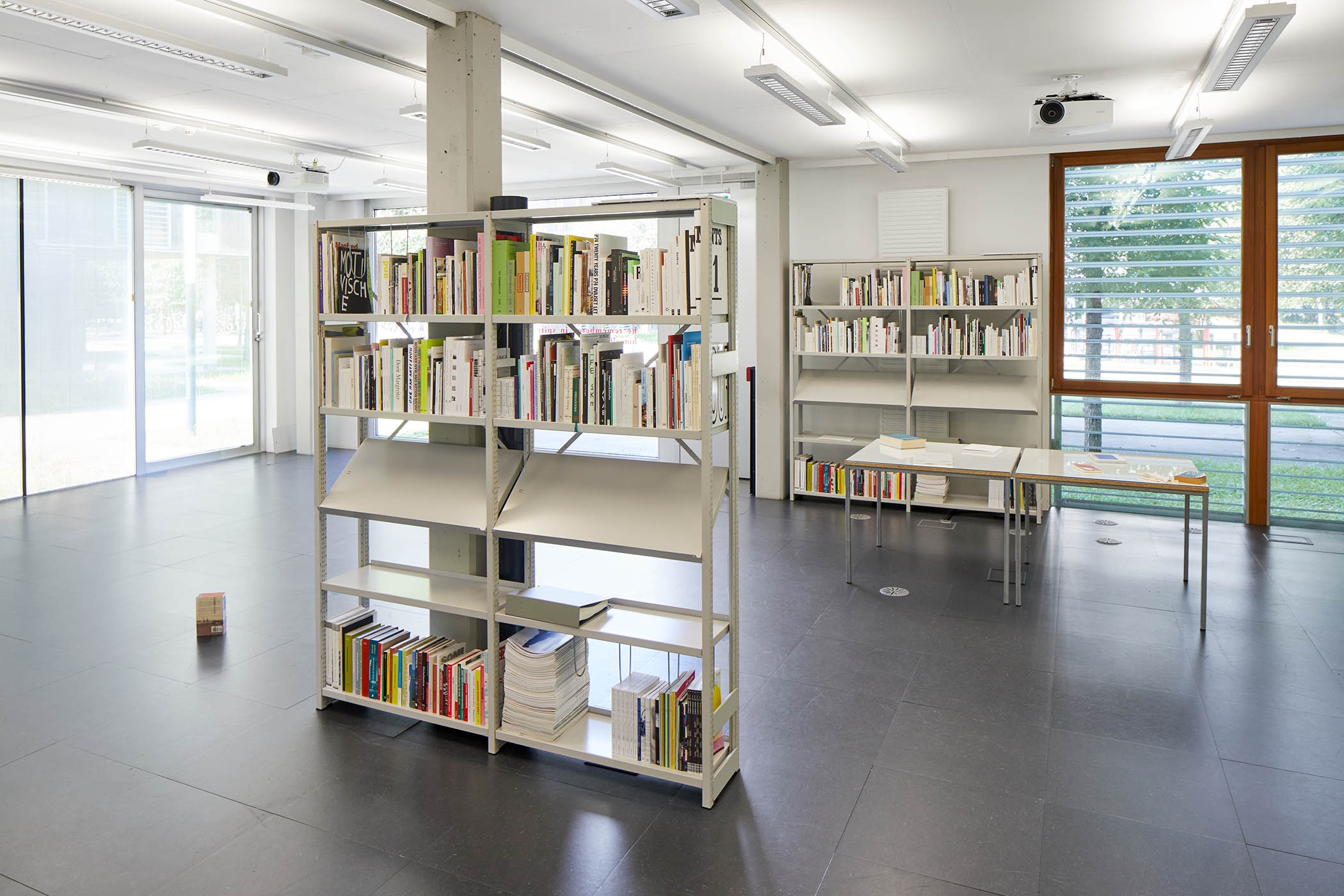
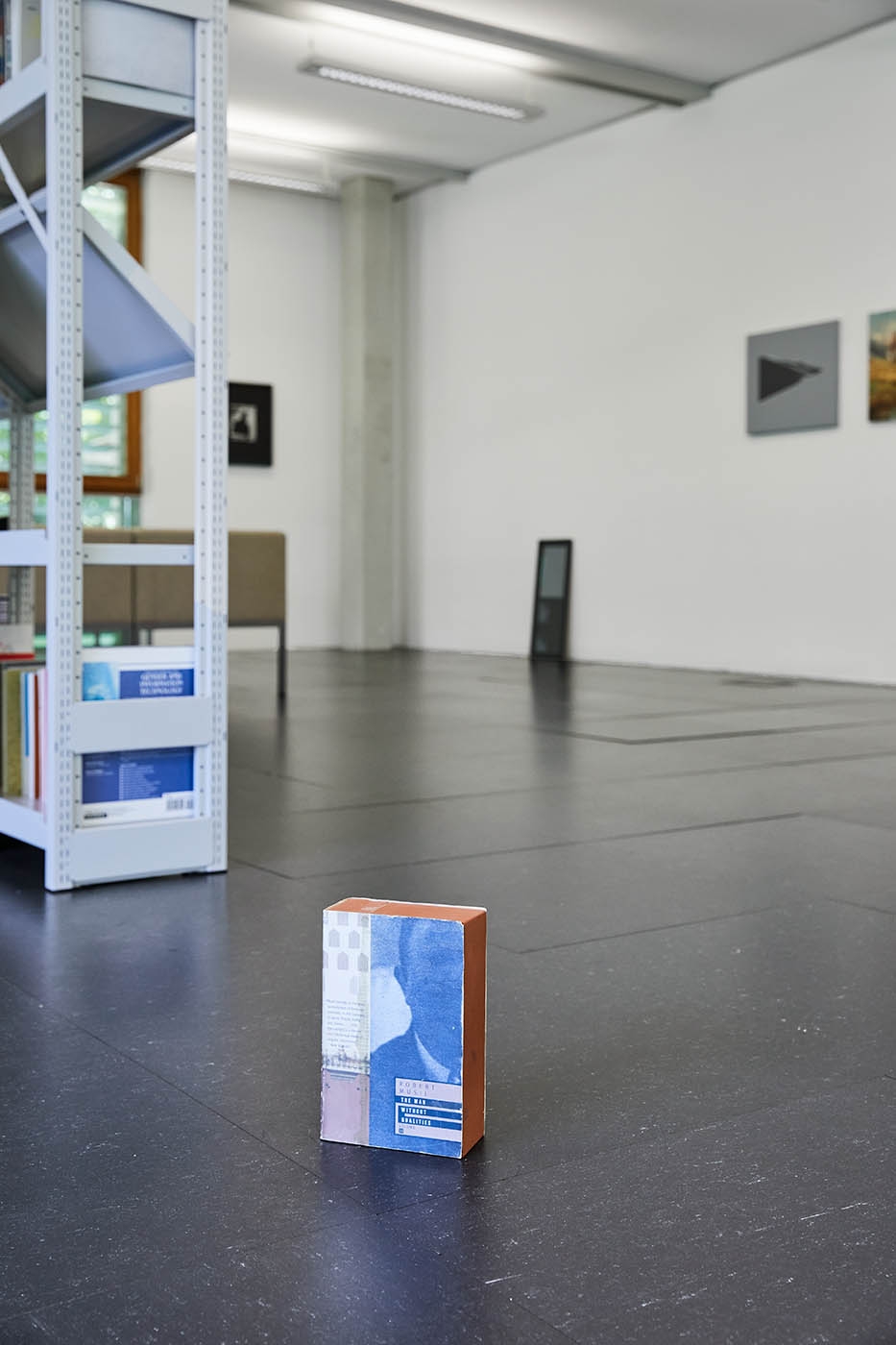
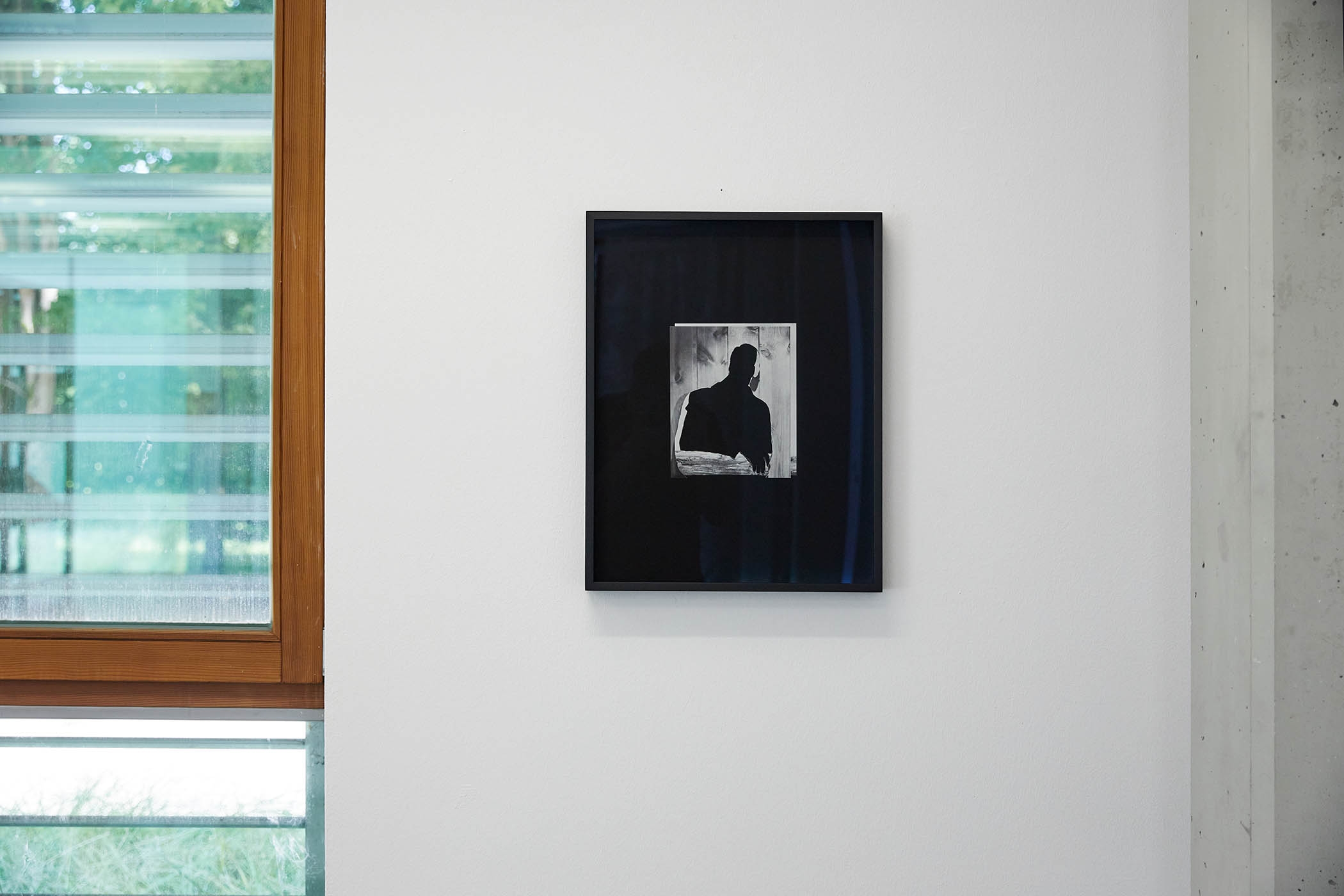


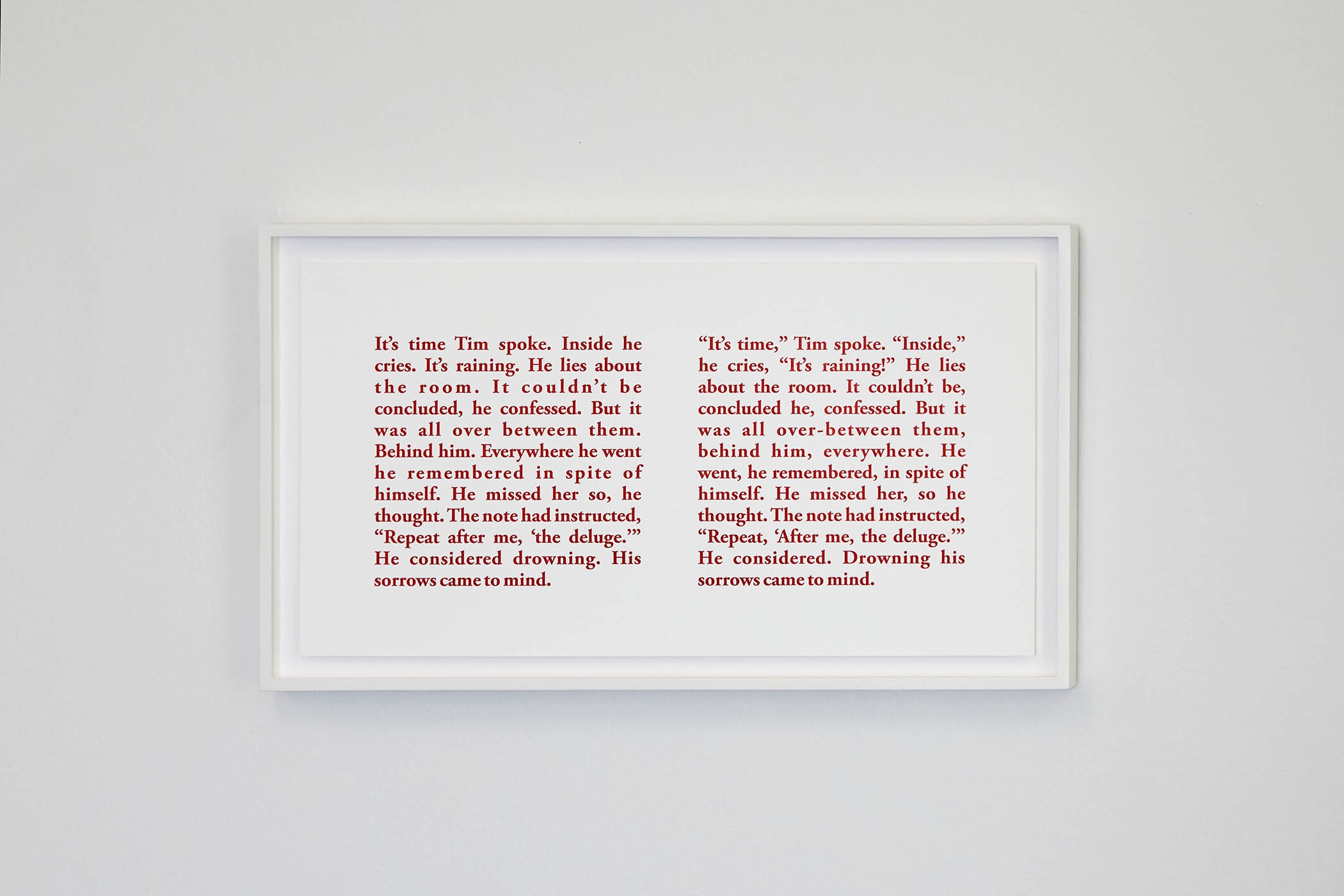






Wörthersee, Wörtersee
Kunstraum Lakeside, Klagenfurt
05.07.2023 – 22.09.2023
Opening, July 4, 2023, 7 pm
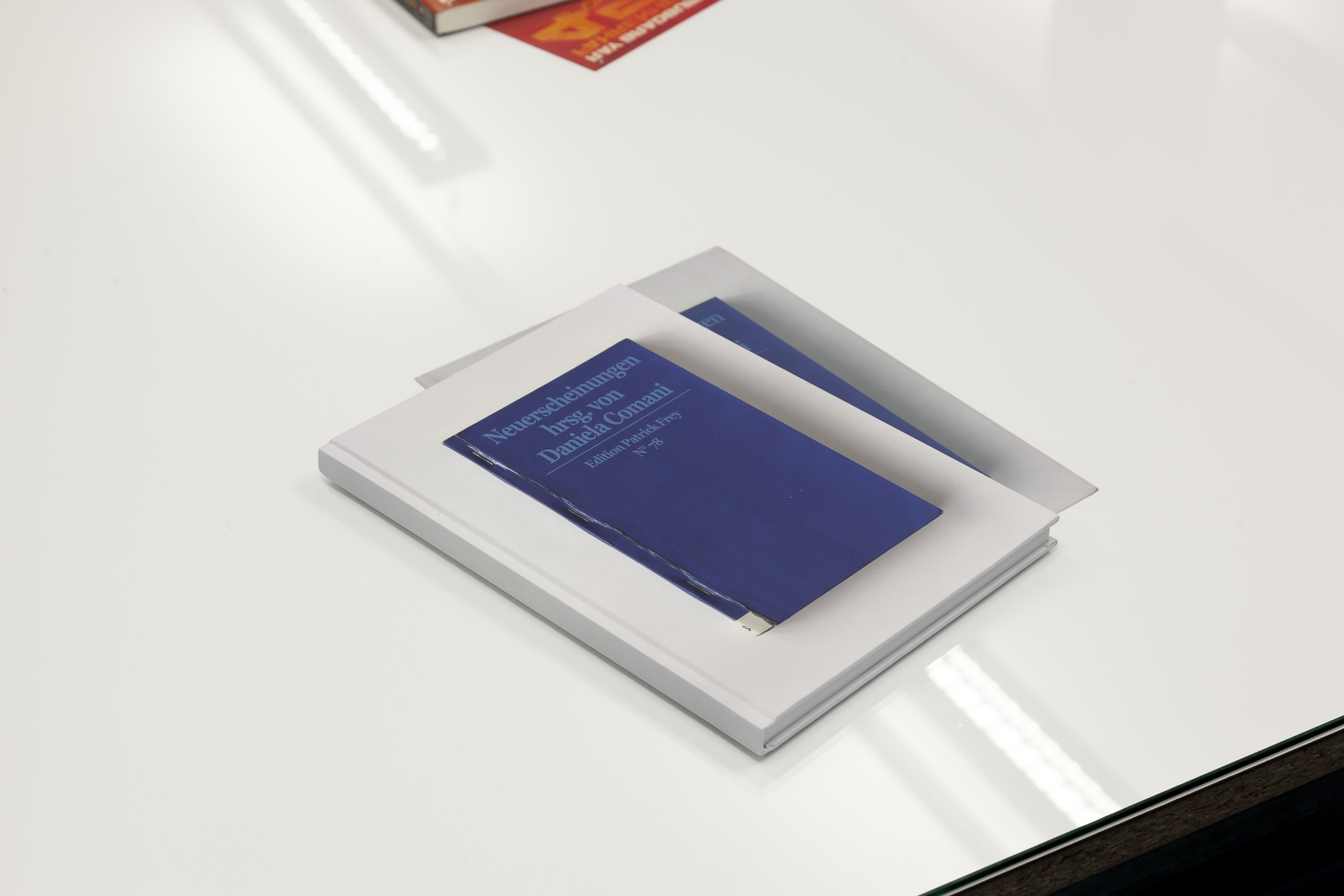
Works by Patrícia Almeida, Maria Anwander, Daniela Comani, Josef Dabernig, Claire Fontaine, Hermann Gabler, Hermann Gabler, Dora García, Irena Haiduk, Iman Issa, Ana Jotta, Marijn van Kreij, John Morgan, Kay Rosen, Hans Schabus, Lena Sieder-Semlitsch, John Stezaker, Mitchell Thar
The double is not a pair, not a copy, an example, surrogate, or twin: passing, either in the place of or replacing, but what? An original, a first, second, something you do not see until you recognize. When there are two—not one—this is what happens: the thing that changes is perhaps not the thing but our relationship to it. And if “identity” is one such relationship of something or someone to themself, what was clear and (ac)countable becomes multiplied, supplementary, and impure. “Everything begins with Echo.”
One and one is eleven, but deliberately and intentionally so. “The day Hedwig came was a Monday, and that Monday morning, before my landlady slipped my father’s letter under the door, I wanted more than anything to pull the covers up over my face, the way I often used to do when I was still living at the apprentices’ hostel.” Yet another Monday, but a specific Monday when the protagonist in Heinrich Böll’s post-wartime novella The Bread of Our Early Years realizes he has forgotten who he was, what he looked like, what he did for a living: as if the present were all of a sudden past tense and the puzzle he was to himself a different puzzle altogether.
“One’s not enough, and two’s too much,” the girl he encounters that day says, hungry and undecided how much cake to order. “One and a half, then,” the waiter suggests. “Kann man das haben?” in turn, is her response—a German expression that is hard to translate here, implying something between “Is that possible?” and “Is that even allowed?”
Switching from the beginning to the end of a relationship: Annie Ernaux’s 38-page book The Young Man is the story of an alter ego “aborting” an affair with someone 20 years her junior, still “dans le premier des choses” (a phrase not meaning “in his prime” but rather “at the start of his experiences”)—while the narrator herself begins to see how “the present was for me but a doubled past” // “le présent n’était pour moi qu’un passé dupliqué”. The duplication, for her, turns to duplicity.
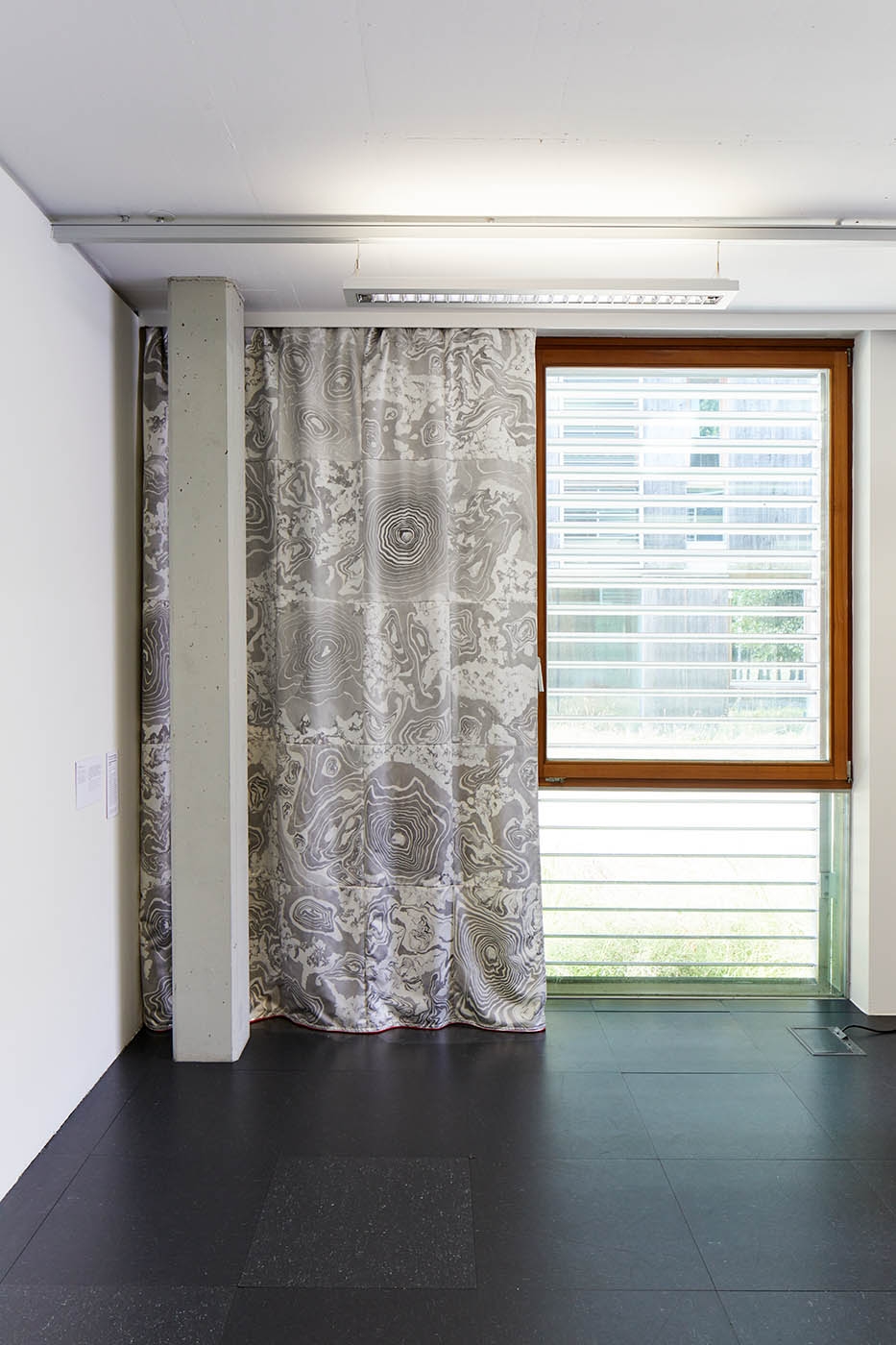
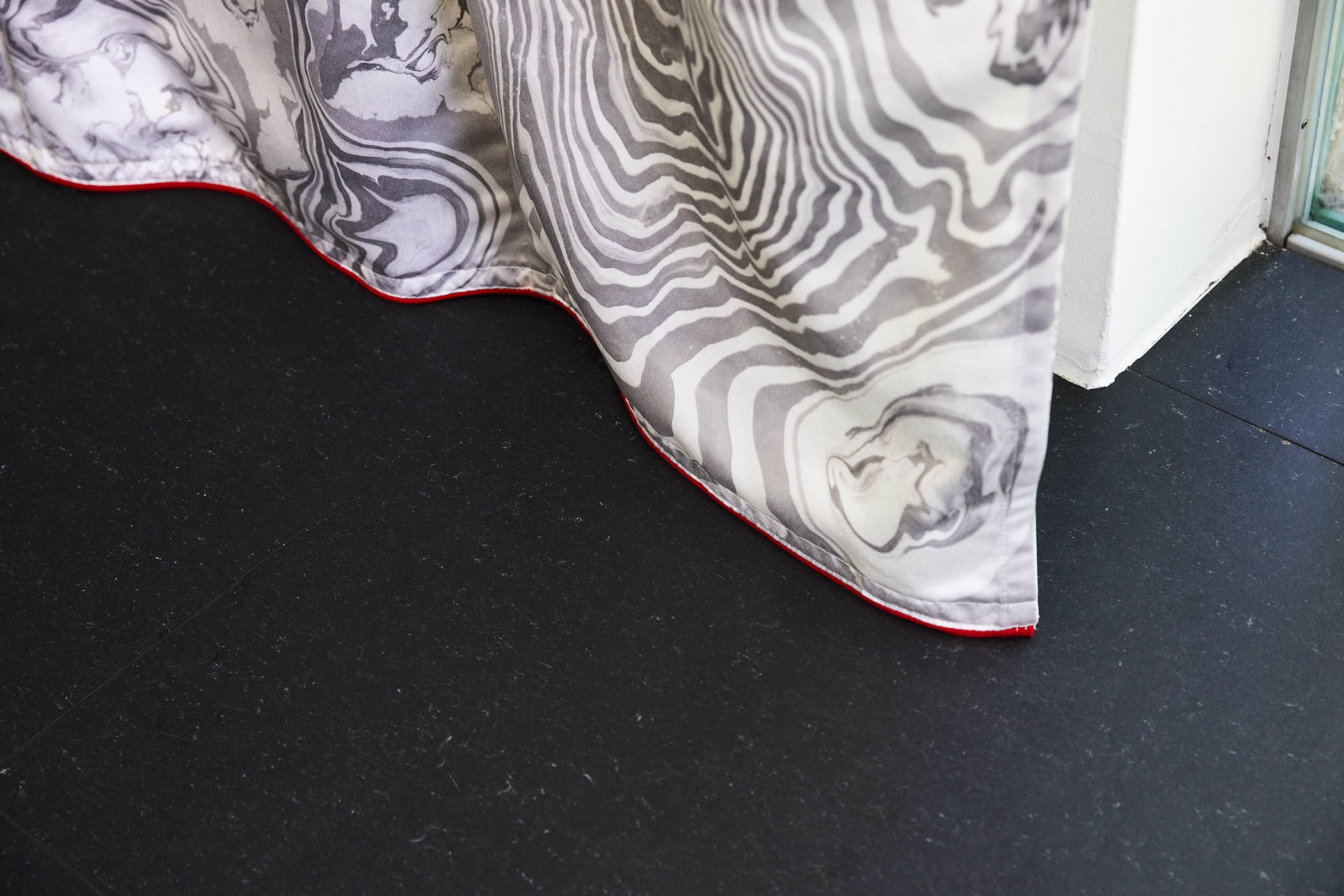
Wörthersee, Wörtersee looks at what doubling, pairing, splitting, juxtaposing, repeating something once (as the first step of repetition) can look like and which (instabilities) it can lead to, through the works of 18/19 artists. As much about translation as hesitation, to put a comma, a period, or not, Wörthersee, Wörtersee is an invocation (“Mirror, Mirror”), a warning (“Jacob, Jacob”), a sigh (“Love, love…”) of excitement or relief (“The sea, the sea!”). It is also an ongoing set of notes and my own attempt at making a bad copy.